Renovate the house you have or build a new one? How a Birmingham family can decide
Neither choice is the smart one by default, so here's how to work out which one fits your house, your lot and your life.
October 20, 2026 · 4 min read
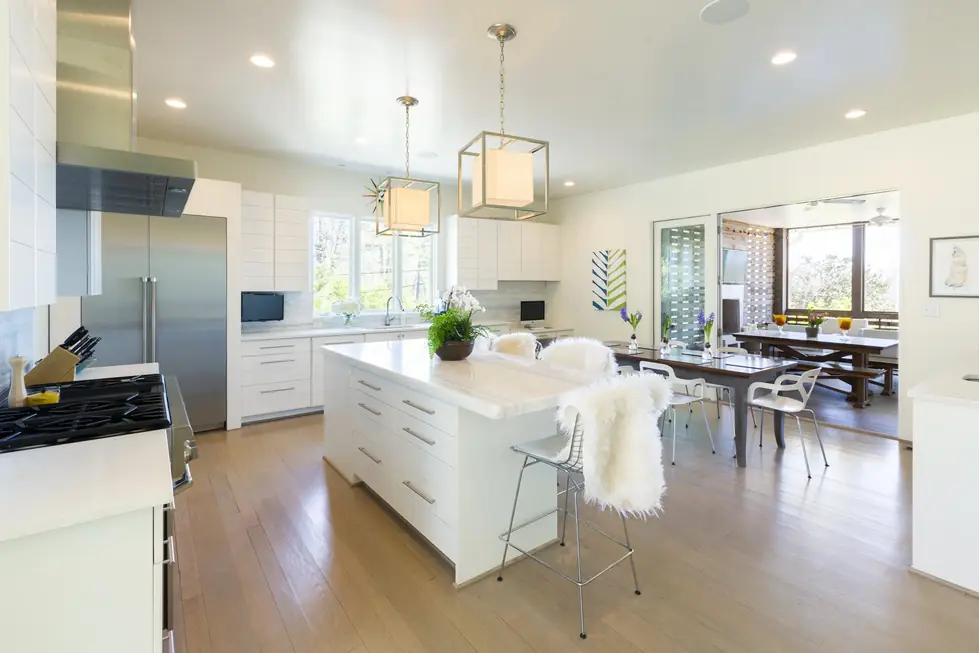
Somewhere in Birmingham tonight, a family is standing in a kitchen they've outgrown and quietly asking the question that comes before every big project. Do we fix this house, or do we start over? It's a fair thing to ask, and the honest answer is that it depends on the house, the lot, and what you hope life in it will look like. Neither choice is the smart one by default. Here's how to think it through before you call anyone.
Start with what actually bothers you
Make a list of what's wrong, and be specific. Not "the house feels small," but "we can't all sit at one table," or "the primary bedroom is down the hall from the only bathroom that works." Problems of layout and flow can often be solved by moving walls, opening a kitchen to a porch, or adding a room. Problems of structure are different. A foundation that has shifted, or a floor plan that fights the roof above it, gets harder to correct the older the house is, and those are the problems that push people toward a new build. Sorting your complaints into those two piles tells you more than you'd expect.
Then write down what you love. This is the half most people skip. If the thing you'd miss is the plaster arch, the old oaks out front, or the way the street looks in October, you're describing a reason to renovate. If you struggle to name much you'd grieve, that's worth knowing too.
What an existing house gives you
A house that's already standing has settled into its lot. It has mature trees, a driveway that works, utilities that are already run, and a neighborhood you chose on purpose. Many of the best streets in Birmingham are lined with houses built with real craft, and that character is part of why people want to live there. A renovation lets you keep it while fixing what the original builder couldn't have known you'd need.
It also tends to keep a project smaller in scope, though not always simpler. Old houses hide things. Behind a wall you might find wiring or plumbing from a different era, or framing that someone altered long before you arrived. A good builder expects some of that and plans for it, rather than acting surprised when it shows up.
What building new gives you
A new custom house lets you decide everything at once: the plan, the ceiling heights, where the light lands at four in the afternoon, how the garage meets the kitchen. Nothing has to be negotiated with a structure that has opinions of its own. If your current house sits on the wrong lot, is the wrong shape, or has been compromised so many times that every improvement means working around a problem, starting fresh can be the cleaner route.
The tradeoff is what you give up. A new house on an established street still has to earn its place beside its neighbors, and a cleared lot loses its mature trees. Those are real losses, and some families decide they matter more than a better floor plan. Others decide the opposite. Both are reasonable.
Questions worth asking before you decide
- Can the problems on my list be solved inside the existing walls, or do they need a different structure altogether?
- If we add on, what will the addition have to match: rooflines, ceiling heights, window styles, trim?
- What do we actually know about the condition of the foundation, the framing, the roof and the mechanical systems?
- If we build new, what are we giving up on this lot, and are we all right with that?
- How long do we plan to live here, and does the answer change what's worth doing?
Write your answers down before you meet with a builder. It makes the first conversation far more useful, and it keeps you from being talked into someone else's preference.
The middle path gets overlooked
People tend to picture two options: patch it or tear it down. The ground in between is much bigger than that. You can renovate the core of a house and add a wing. You can strip a structure down to its frame and rebuild it around a new plan. You can take an outbuilding or an older structure and turn it into something different entirely. Which of these fits depends on what the house will tolerate, and that's a judgment you want from someone who has seen the inside of a lot of walls.
It's also worth thinking about phasing. Some families do the parts that bother them most first, such as the kitchen and the primary suite, and leave the rest for later. That only works if the early work is planned with the later work in mind, so the first phase doesn't have to be undone to make room for the second.
Talk to a builder before you decide
You don't need to decide alone, and you shouldn't. A builder who works on both new homes and renovations has no reason to steer you one way, because both are the work he does. Ask for an honest read: what the house can do, what it can't, and what he'd do if it were his own.
Spruce Renovations is a Birmingham building company that does new custom homes and specialty renovations. Founder Steve Varner has been building and renovating homes in the area for over 30 years, more than 300 of them, and he works closely with the homeowner and the architect on every project. If you'd like to talk through your own house, call 205.369.2777.
Spruce Renovations, 205.369.2777
Call 205.369.2777More articles
Why your architect and your builder should meet before the drawings are finished
A finished set of plans is the worst time for a builder to see them for the first time.
Planning a master suite addition that looks like it was always there
Getting an addition to disappear into the old house comes down to matching a handful of details early.